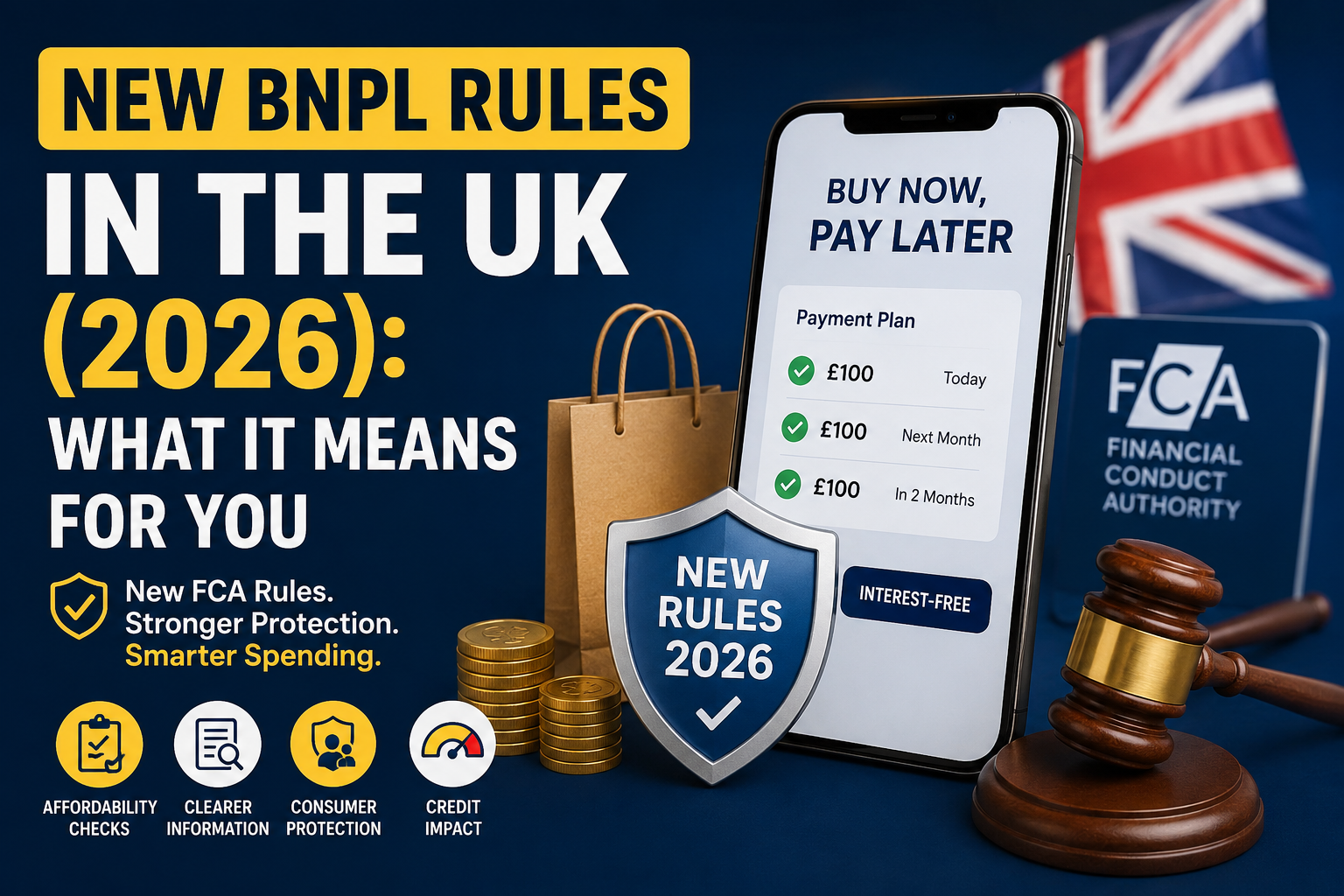
In 2026, Buy Now, Pay Later (BNPL) became one of the most popular ways to shop in the UK. From fashion to electronics, millions of people are using BNPL services to split payments into smaller chunks.
It feels easy. It feels convenient. But behind that convenience, there's a growing concern: are people falling into hidden debt? If you're worried about managing your finances better, check out our guide on getting out of debt step-by-step on Debt Free Path.
That's exactly why the Financial Conduct Authority (FCA) has stepped in with new regulations in 2026.
In this guide, we'll break everything down in simple terms: what BNPL is, what changed in 2026, the risks most people ignore, and how to use it safely.
What is Buy Now, Pay Later (BNPL)?
BNPL allows you to buy a product today and pay later in instalments, usually interest-free. Popular providers in the UK include:
- Klarna
- Clearpay
- PayPal Pay in 3
For example: you buy a £300 phone, pay £100 today, £100 next month, and £100 later. Simple, right? But this simplicity is where the problem starts.
Why BNPL Became a Problem in the UK
By 2026, the BNPL market in the UK crossed £13+ billion. Many users:
- Didn't realise they were taking on debt
- Used multiple BNPL accounts at once
- Missed payments, leading to fees and credit impact
Unlike credit cards, BNPL previously had less regulation, making it easier to overspend.
What Changed in 2026?
The Financial Conduct Authority (FCA) introduced new rules to protect consumers.
1. Affordability Checks
Lenders must now check your income, your existing debts, and your ability to repay. This reduces irresponsible lending.
2. Clearer Information
Companies must clearly show payment schedules, late fees, and the risks of missing payments. No more hidden surprises.
3. Consumer Protection
BNPL now falls under stronger financial rules, including an easier complaints process and access to the ombudsman service.
4. Credit Impact Awareness
Some BNPL usage may now affect your credit score and be reported to credit reference agencies.
BNPL Before vs After 2026
| Feature | Before 2026 | After 2026 |
|---|---|---|
| Regulation | Limited | Fully regulated |
| Affordability Checks | Rare | Mandatory |
| Transparency | Low | High |
| Credit Score Impact | Often unclear | More visible |
| Consumer Protection | Weak | Strong |
| Risk Awareness | Low | Improved |
Is BNPL Dangerous in 2026?
Short answer: it depends on how you use it. BNPL is not "bad" — but it can become dangerous if misused. Common risks include:
- Overspending, because it feels "cheap"
- Multiple BNPL plans running at once
- Missed payments leading to fees
- Impact on your credit score
- A false sense of financial security
If debt starts getting out of control, it may be worth speaking to professionals — you can explore trusted UK insolvency specialists here for guidance.
Real-Life Example
Imagine this: you buy £150 of clothes on BNPL, a £200 phone on BNPL, and £100 of shoes on BNPL. You only pay £150 today… but you actually owe £450 in total.
The rule: this is how hidden debt builds up. Each BNPL plan feels small on its own, but stacked together they can quietly become a real debt problem — always treat BNPL as borrowing, not "free" money.
How to Use BNPL Safely (Smart Tips)
If you still want to use BNPL, follow these rules:
- Treat it like debt — always ask, "Would I buy this if I had to pay full today?"
- Limit active plans — avoid having more than 1–2 BNPL plans at once.
- Track payments — set reminders so you never miss a due date.
- Avoid non-essential spending — use BNPL only for essentials and planned purchases.
- Check your budget — make sure repayments fit within your monthly income.
Why This Topic Matters in 2026
With rising living costs in the UK, people are looking for flexible payment options and managing tighter budgets. BNPL fills that gap — but also increases financial risk.
Understanding how it works can save you from long-term debt problems. Want to stay completely debt-free in 2026? Explore our complete Debt Free Path roadmap for practical, real-life strategies.
Final Thoughts: There Is a Way Out
BNPL in 2026 is safer than before — but not risk-free. The new rules are a step forward, but the responsibility still lies with users.
If used wisely, BNPL can help manage cash flow. If misused, it can quietly lead to serious debt. The key is simple: stay aware, stay in control, and spend within your limits.
At Debt Free Path, we help people build a realistic, judgement-free plan to become debt free — not overnight, but step by step. If you're ready to talk through your options, contact our team today.
Frequently Asked Questions
BNPL is a payment method that allows you to split purchases into smaller instalments over time, often interest-free.
Yes, BNPL is now regulated by the Financial Conduct Authority (FCA), with stricter rules on affordability checks and consumer protection.
In 2026, some BNPL providers may report activity to credit agencies, meaning missed payments can impact your credit score.
BNPL can be interest-free, but it lacks flexibility and can encourage overspending. Credit cards offer more protection but may include interest.
You may face late fees, account restrictions, and a negative impact on your credit score.
It's safest to keep it to 1–2 active plans to avoid financial strain.
Yes, even if interest-free, BNPL is still a form of borrowing and should be treated as debt.
Feeling the Weight of Multiple BNPL Plans?
Speak to a UK debt specialist for free, confidential advice — no judgement, no pressure.
Get Free Advice Today