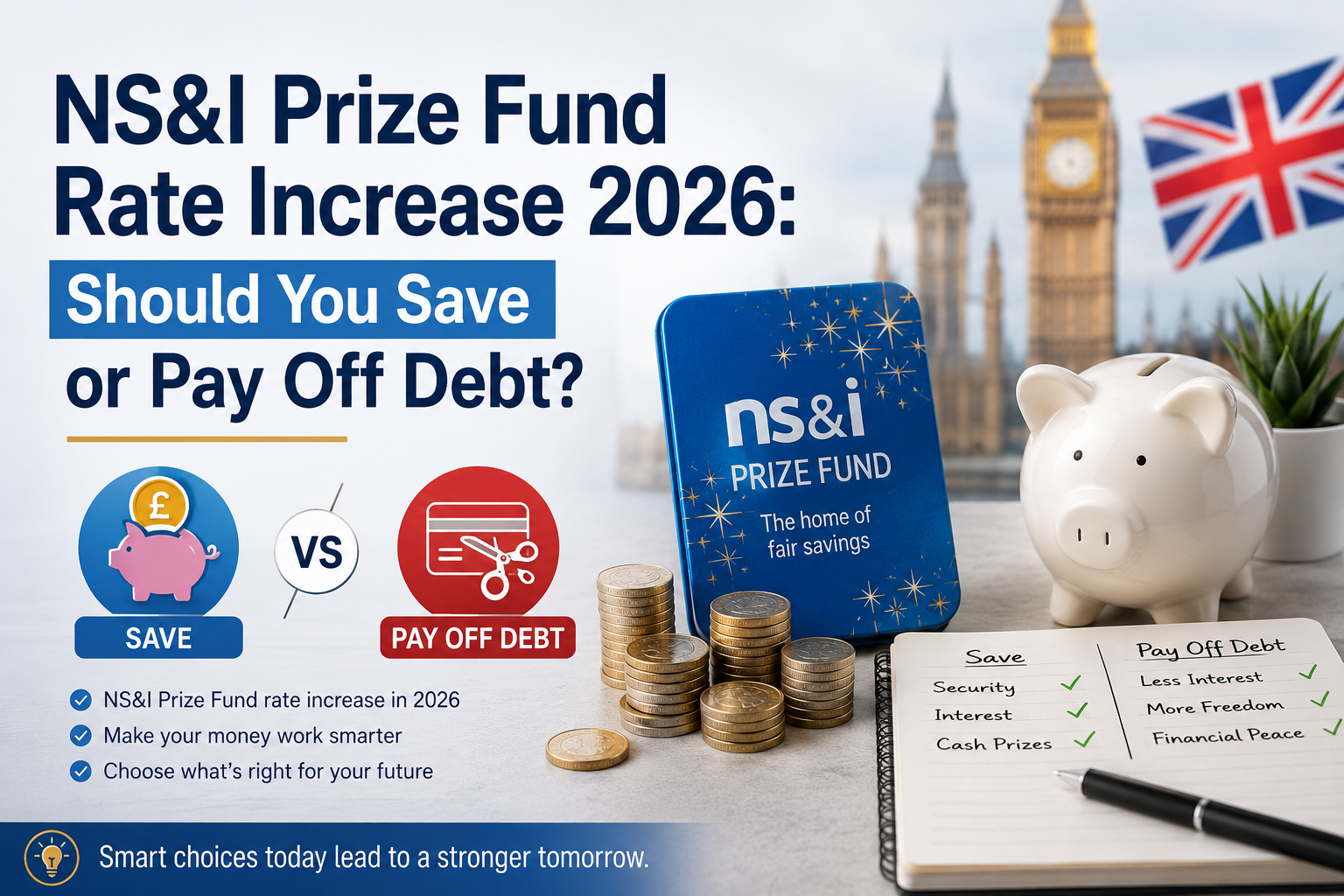
NS&I just raised the Premium Bonds prize fund rate again, and it's got savers across the UK asking the same thing: put spare cash into Premium Bonds or clear debt first? At Debt Free Path, this is one of the most common questions we get, so here's the answer broken down clearly — no long paragraphs, just the facts and what to actually do with them.
✅ Quick answer: If you have high-interest debt (credit cards, payday loans, store cards) — pay it off first, full stop. If your debt is low-interest (mortgage, student loan, 0% card), saving and repaying can happen side by side. If you're debt-free, the new NS&I rate is genuinely worth considering for an emergency fund.
What Changed: NS&I Prize Fund Rate 2026
| Detail | Before (August 2026) | Now (September 2026 draw) |
|---|---|---|
| Prize fund rate | 3.80% | 4.35% tax-free |
| Odds per £1 bond | 22,000 to 1 | 21,000 to 1 |
| Total prizes (monthly) | ~6.2 million | 6.5 million+ |
| Prize pot value | ~£434 million | £497 million+ |
| £100,000 prizes | 83 | 95 |
| £50,000 prizes | 165 | 192 |
| £25,000 prizes | 331 | 382 |
| £10,000 prizes | 827 | 954 |
NS&I also raised rates on Direct Saver, Income Bonds, and its full range of British Savings Bonds from the same date. The stated reason: reflecting current market conditions and meeting NS&I's annual net financing target for the Treasury.
Is 4.35% Actually Good?
Not quite as good as it sounds. Here's why:
- It's a prize fund rate, not a guaranteed interest rate — think of it as the average payout across all bondholders, not what you personally will get.
- Some people win nothing for years. Others win in month one. It's luck-based, not compounding interest.
- Top easy-access savings accounts are currently paying around 4.5%, guaranteed — still ahead of the Premium Bonds average.
- Your capital is 100% safe either way, since Premium Bonds are backed by HM Treasury, much like the wider scheme described on Wikipedia's Premium Bonds page.
Save vs Pay Off Debt: The Real Comparison
| Your situation | Typical rate you're paying/earning | What to do |
|---|---|---|
| Credit card debt | 22%–35% APR | Pay off first — no savings rate beats this |
| Payday loans / BNPL arrears | Often 30%+ APR | Pay off first, urgently |
| Personal loan | 8%–18% APR | Usually pay off before saving |
| 0% balance transfer (in promo period) | 0% | Save alongside repaying, but clear before promo ends |
| Mortgage | 4%–6% APR | Saving and overpaying can both make sense |
| Student loan (UK) | Often below inflation | Low priority to overpay |
| No debt | N/A | Premium Bonds/savings are worth considering |
✅ The simple rule: if the interest rate on your debt is higher than the interest rate you'd earn saving, clearing the debt is the better guaranteed return. A 27% APR credit card costs you far more than a 4.35% prize fund rate could ever realistically win back.
A Sensible Order of Priorities
- List every debt you have with its actual interest rate, not just the balance.
- Build a tiny emergency buffer — even £500–£1,000 — so a surprise bill doesn't push you back onto a card.
- Attack anything above ~10–15% APR first, starting with the highest rate (avalanche method) or smallest balance (snowball method), whichever keeps you motivated.
- Once high-interest debt is cleared, consider Premium Bonds or a savings account for the rest.
- Struggling to keep track of multiple repayments? Look into a debt consolidation plan before adding any money to savings.
Frequently Asked Questions
No. The 4.35% figure is an average prize fund rate. Your actual return depends on winning the monthly draw — many bondholders earn less than this, or nothing, in a given year.
Yes, in almost every case, if your debt's interest rate is higher than what you'd realistically earn from saving. UK credit cards often charge 22%+ APR, well above any savings return.
They can be — especially as a tax-free emergency fund once you're debt-free — since your capital is fully protected. For pure growth, a guaranteed savings account may still outperform the "average" prize rate.
Keep a small emergency buffer, then direct extra income toward your highest-interest debt first. If you're juggling several debts, get a proper debt help plan built around your real numbers.
The Bottom Line
| If you are... | Best move |
|---|---|
| Carrying high-interest debt | Pay it off before saving anywhere |
| Managing low-interest debt only | Save and repay in parallel |
| Debt-free with spare cash | Consider Premium Bonds for a tax-free emergency fund |
| Unsure where you stand | Speak to our team before deciding |
NS&I's rate rise is real good news — just not for everyone at the same time. Clear the expensive debt first; it's one of the few "guaranteed returns" you'll ever get. For the full background on how Premium Bonds work, see the Wikipedia entry, or search the latest NS&I updates directly on Google.
Not Sure Whether to Save or Pay Off Debt First?
Speak to a UK debt specialist for free, confidential advice — no judgement, no pressure.
Get Free Advice Today