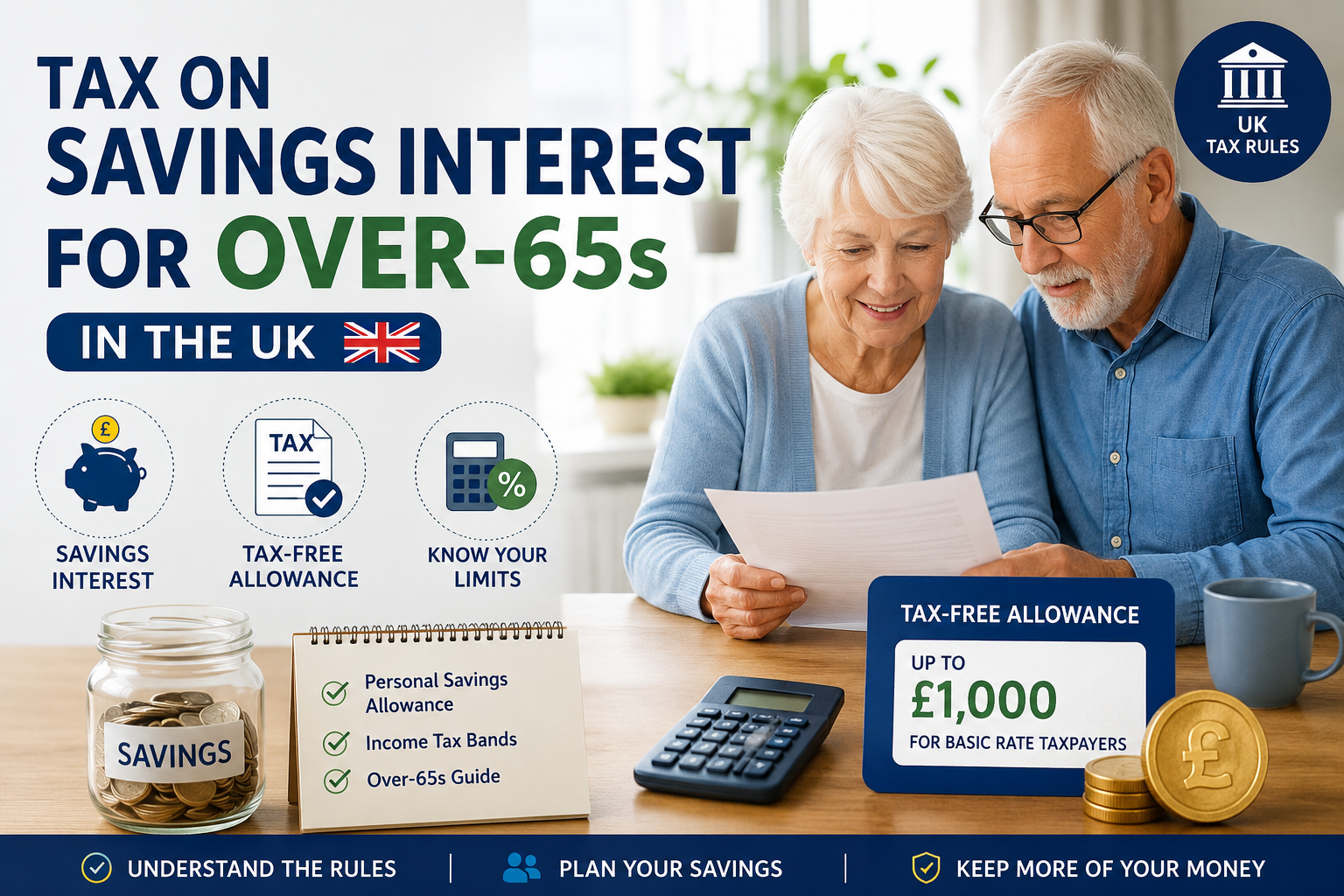
If you're over 65 and have money in a savings account, you may have wondered: "Do I have to pay tax on my savings interest?" The good news is that many pensioners pay no tax on their savings interest at all.
However, it depends on how much you receive from your State Pension, private or workplace pension, and other income, as well as how much interest your savings earn. The rules can sound complicated at first, so we've broken them down into simple terms.
At Debt Free Path, we also understand that savings and debt often go hand in hand. You may be trying to work out whether it's better to keep your savings for emergencies or use some of them to deal with outstanding debts. That's why this guide doesn't just explain the tax rules — we'll also look at what your savings could mean if you're dealing with debt on a fixed retirement income.
We'll look at the 2026/27 tax year, explain the main allowances, give you a simple example, and answer some common questions.
✅ Quick answer: Depending on your other income, you may be able to earn savings interest without paying tax. The main figures to understand are the £12,570 Personal Allowance, the Starting Rate for Savings, and the Personal Savings Allowance.
Do Over-65s Get a Special Tax Allowance?
Not anymore. You may remember hearing about a special tax allowance for older people, but the old age-related Personal Allowance was phased out in 2016. Today, your age doesn't automatically give you a bigger Personal Allowance.
For the 2026/27 tax year, the standard Personal Allowance is:
£12,570 — This means you can normally receive up to £12,570 of taxable income before paying Income Tax, although there are exceptions for people with very high incomes.
The important thing for pensioners is that your income may be relatively low. This can mean that other savings allowances become useful.
The Three Main Allowances to Know
There are three main things to understand when looking at tax on savings interest.
| Allowance | 2026/27 amount | Who can use it? |
|---|---|---|
| Personal Allowance | £12,570 | Most people, subject to the normal rules |
| Starting Rate for Savings | Up to £5,000 at 0% | People with sufficiently low non-savings income |
| Personal Savings Allowance | £1,000 basic-rate / £500 higher-rate | Depends on your tax band |
| Cash ISA | Interest is tax-free | Anyone eligible to use an ISA |
1. Personal Allowance – £12,570
Your Personal Allowance is the amount of taxable income you can normally receive before Income Tax starts. For many pensioners, their State Pension and private pension will use some or all of this allowance.
2. Starting Rate for Savings
This is particularly useful for people with lower incomes. You may be able to receive up to £5,000 of savings interest at 0% tax, depending on your other income. The amount available depends on your non-savings income.
3. Personal Savings Allowance
Your Personal Savings Allowance depends on your tax band. Basic-rate taxpayers can normally receive £1,000 of savings interest tax-free. Higher-rate taxpayers can normally receive £500. Additional-rate taxpayers do not receive a Personal Savings Allowance.
The important point is that these rules can work together, depending on your circumstances.
What Does This Mean in Real Life?
Let's use a simple example. Imagine Margaret is 71. She receives:
- State Pension and private pension income of £14,200 a year
- £30,000 in savings
- Her savings earn £1,350 interest during the year
Her non-savings income is £14,200. The relevant calculation is:
| Calculation | Amount |
|---|---|
| Pension income | £14,200 |
| Personal Allowance | £12,570 |
| Income above Personal Allowance | £1,630 |
| Starting Rate for Savings threshold | £17,570 |
| Remaining savings starting-rate band | £3,370 |
| Savings interest | £1,350 |
| Tax on savings interest | £0 |
Because Margaret's non-savings income is below the relevant threshold, her £1,350 savings interest can fall within the Starting Rate for Savings.
✅ In this example, Margaret pays £0 tax on her savings interest. That's why simply saying "I'm over 65, so I'll pay tax on my savings" isn't necessarily correct. Your total income matters.
When Might a Pensioner Have to Pay Tax on Savings Interest?
You may need to pay tax if your total income and savings interest are high enough to use up the available allowances. For example, you may need to look more closely if:
Your pension income already uses most of your Personal Allowance
The full new State Pension is close to the £12,570 Personal Allowance in 2026/27. If you also receive a workplace or private pension, you could have less room for other taxable income.
You have a large amount in taxable savings
If you have substantial savings outside an ISA, the interest can add up. For example, a savings account paying 4% interest on £50,000 would produce around £2,000 interest a year. Whether you pay tax on that £2,000 depends on your other income and your available allowances.
You are a higher-rate taxpayer
If your income takes you into the higher-rate tax band, your Personal Savings Allowance is normally reduced from £1,000 to £500. This can make a noticeable difference if you have a lot of money in savings.
What About Savings in a Cash ISA?
Cash ISAs work differently. Interest earned inside a Cash ISA is tax-free. You don't normally have to pay Income Tax on the interest and it doesn't use your Personal Savings Allowance.
The ISA allowance is currently £20,000 per tax year across ISA types, subject to the normal ISA rules. If you're comparing an ordinary savings account with an ISA, it's therefore worth considering not just the interest rate, but also the tax treatment.
Do Banks Tell HMRC About My Savings Interest?
Usually, you don't have to calculate and report your savings interest to HMRC yourself. Banks and building societies generally report interest information to HMRC.
If tax is due, HMRC may collect it by adjusting your PAYE tax code if you have one. If you don't have PAYE income, HMRC may contact you separately or send a calculation.
However, everyone's tax situation is different. If you already complete a Self Assessment tax return or have complicated tax affairs, you may need to deal with your savings interest differently. If you're unsure, check the latest guidance from GOV.UK.
Should You Use Your Savings to Pay Off Debt?
This is where things can become more complicated. Someone might have £20,000 in savings but also owe £20,000 on credit cards and loans. The obvious question is: "Should I use my savings to clear the debt?" There isn't one answer that works for everyone. Before moving your savings, look at the bigger picture.
1. Compare the interest you're earning with the interest you're paying
This is one of the simplest things to check. Suppose your savings earn 4% interest and your credit card charges 20% — your debt is growing much faster than your savings. Even if you pay some tax on your savings interest, the difference can still be significant. But don't automatically empty your savings account.
2. Keep some emergency money available
Unexpected costs can happen at any age. A boiler might break. You might need urgent home repairs. Your car could need work. You may have an unexpected medical or household expense. If you use every penny of your savings to clear debt and then face an emergency, you may have to borrow again. That's why it's important to think about keeping a sensible emergency buffer before using savings to make large debt repayments.
3. Check whether your savings affect benefits
If you receive means-tested benefits, your savings can sometimes affect what you're entitled to. For example, savings can be relevant when assessing Pension Credit and other benefits. This is separate from Income Tax — in other words, you could pay no tax on your savings interest but still need to consider how your savings affect means-tested benefits. If you're receiving benefits or think you may be entitled to them, get a benefits check before making a major financial decision.
4. Think about priority debts first
Not all debts have the same consequences. Debts such as rent arrears, council tax arrears, certain energy debts, and mortgage or secured loan arrears can have much more serious consequences than ordinary unsecured debts. If you're struggling with several types of debt, don't simply pay whichever creditor is sending you the most letters — get advice and work out which debts need attention first.
5. You may not need to use all your savings
If your debts are much larger than your savings, using your savings may only solve part of the problem. For example, with savings of £10,000 and total unsecured debt of £30,000, using all £10,000 would still leave £20,000 of debt. Depending on your circumstances, a structured debt solution could be worth considering. Options may include a Debt Management Plan or, in suitable cases, an IVA. You can learn more about Debt Management Plans or explore debt solutions for over-65s by speaking to our team.
What If You're Struggling With Debt on a Fixed Income?
Debt can feel particularly difficult when your income comes mainly from a pension. You may have less flexibility to increase your income, while household bills, energy costs and other expenses still need to be paid. You might find yourself using a credit card to cover one bill and then using another form of credit to pay the first one.
That's when it's worth stepping back and looking at the whole situation. You don't have to wait until you've missed several payments before asking for help. Debt Free Path can help you understand what options may be available based on your circumstances. If you want to discuss your situation, you can contact Debt Free Path and talk through your options.
What Should You Do Next?
If you only wanted to know whether your savings interest is taxable, the main thing to remember is this: being over 65 doesn't automatically mean your savings interest is taxed. Your other income and the allowances available to you are what really matter.
And if you're also dealing with debt, don't look at your savings and debts separately. A decision that looks sensible on paper — such as using all your savings to clear debt — could create problems later if you have no emergency fund or your benefits are affected.
Before making a big financial decision, look at:
- Your total annual income
- How much interest your savings actually earn
- The interest rates on your debts
- Whether you receive means-tested benefits
- How much emergency savings you would have left
- Whether you could benefit from professional debt advice
Frequently Asked Questions
They can, but being over 65 does not automatically mean you pay tax. Your tax position depends on your total income, savings interest and the allowances available to you.
There isn't a separate Personal Savings Allowance just for pensioners. The Personal Savings Allowance depends mainly on your tax band, not your age. However, pensioners with lower non-savings income may benefit from the Starting Rate for Savings.
There isn't one single figure that applies to every pensioner. Your available tax-free amount depends on your Personal Allowance, other income, Starting Rate for Savings and Personal Savings Allowance. That's why two people with exactly the same amount in savings could have different tax bills.
Yes. Interest earned inside a Cash ISA is normally tax-free and doesn't use your Personal Savings Allowance.
Premium Bonds don't pay interest in the usual way. Instead, they offer prizes, and eligible Premium Bond prizes are tax-free.
Yes, potentially. Savings and other capital can affect means-tested benefits such as Pension Credit. This is separate from Income Tax, so don't assume that "tax-free" automatically means "ignored for benefits". If you receive Pension Credit or another means-tested benefit, check the current rules before moving a large amount of money.
It can help some married couples and civil partners. If one partner doesn't use all of their Personal Allowance and the other partner is a basic-rate taxpayer, the lower earner may be able to transfer part of their allowance. For 2026/27, the transferable amount is £1,260, subject to the eligibility rules. It's worth checking whether you qualify before assuming you can't reduce your tax bill.
If you believe you've paid too much tax, you may be able to claim a refund. Depending on your circumstances, you may be able to use form R40 or claim through Self Assessment if you already complete a return. If you're unsure, check the latest HMRC guidance before submitting a claim.
Not necessarily. It depends on how much you owe, the interest rates on your debts, how much savings you have, whether you need an emergency fund, whether you receive means-tested benefits, whether your debts include priority debts, and whether another debt solution may be more suitable. If you're unsure, get advice before using a large part of your savings.
Not Sure Whether to Use Your Savings or Get Debt Advice?
Speak to a UK debt specialist for free, confidential advice — no judgement, no pressure.
Get Free Advice Today